

 中文简体
中文简体Quick answer: a solenoid valve works by using an electric current through a coil to generate a magnetic field, which pulls or pushes a metal plunger to open or close a small opening (the orifice) that controls fluid flow — no manual handle required. In a normally closed valve, the default (unpowered) state blocks flow, and energizing the coil opens it; a normally open valve works the opposite way. This simple electromagnetic mechanism is exactly what makes a solenoid valve for an RO (reverse osmosis) system so effective at automatic tasks like shutting off incoming water once a storage tank is full — it reacts in a fraction of a second without anyone needing to turn a valve by hand.
Solenoid valves are one of the most common components you'll never see, quietly automating water flow in everything from washing machines to irrigation systems to home RO water filters. Understanding the mechanism behind them isn't just academic — it directly explains why certain valve types, materials, and voltage ratings matter for specific applications, especially when purified water quality and long-term reliability are on the line.
How Does a Solenoid Work? The Mechanism Step by Step
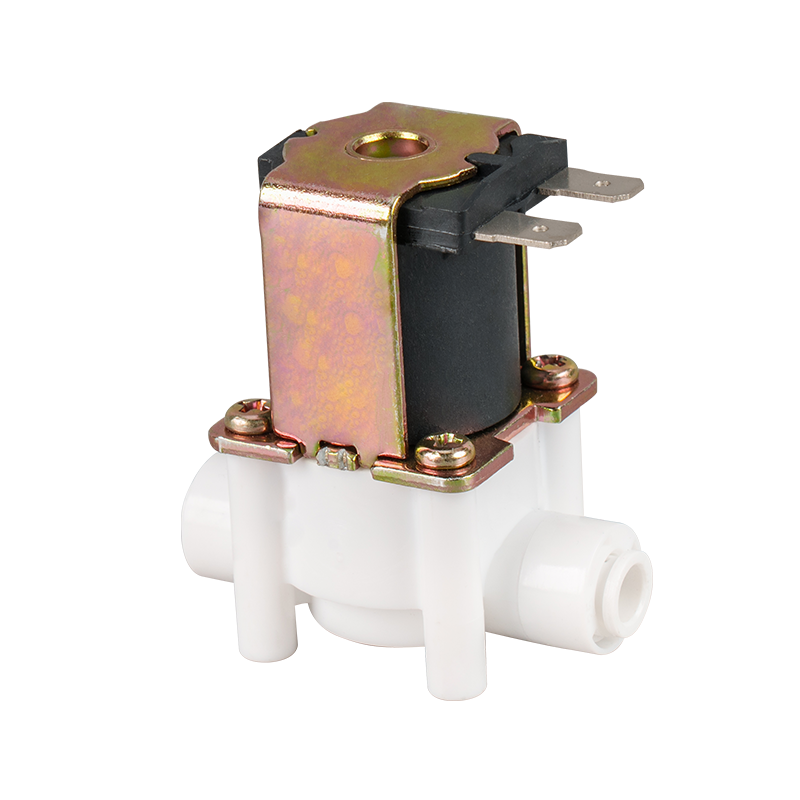
A solenoid valve is built from a small set of core parts: a coil of wire (the solenoid), a movable metal plunger (also called an armature) at the coil's center, a spring, and a valve body with an orifice the plunger sits over. The entire mechanism converts electrical energy into a simple up-or-down mechanical motion.
Electric current flows through the coil
Current generates a magnetic field around the plunger
Magnetic field pulls or pushes the plunger
Plunger movement opens or closes the orifice
Fluid flows or stops accordingly
When power is removed, the magnetic field collapses instantly, and a small internal spring pushes the plunger back to its default resting position. This is what makes solenoid valves fast-acting — the whole open-or-close cycle typically happens in a fraction of a second, which is far quicker than a person turning a manual valve.
Normally Closed vs. Normally Open Valves
Solenoid valves are built as either normally closed (NC) or normally open (NO), and the distinction determines what happens if power is lost — a detail that matters more than it might seem for safety-critical applications.
| Type | Default (No Power) State | When Energized | Common Use Case |
|---|---|---|---|
| Normally Closed (NC) | Closed — no flow | Opens, allowing flow | Most water shut-off applications, including RO inlet valves — fails safe by stopping flow if power is lost |
| Normally Open (NO) | Open — flow continues | Closes, stopping flow | Applications where continuous flow during a power outage is the safer default |
Normally closed is by far the more common configuration for drinking water systems, precisely because it fails safe: if power drops unexpectedly, the valve defaults to blocking flow rather than leaving water running unchecked.
When replacing a solenoid valve, always confirm whether the original was NC or NO before ordering a replacement — installing the wrong type can leave a system either permanently blocked or, worse, unable to shut off water when it's supposed to.
Solenoid Valve for RO System : What It Actually Does
In a typical reverse osmosis system, a solenoid valve sits at the water inlet and acts as the automatic gatekeeper for the entire filtration process. Its main jobs are straightforward but essential to how the system runs without manual attention:
- Opens the inlet when the system starts: When the RO system calls for water — typically because the storage tank pressure has dropped — the inlet solenoid valve energizes and opens, letting feed water begin the filtration process.
- Shuts off automatically when the tank is full: A pressure switch or float mechanism signals the solenoid to close once the storage tank reaches capacity, stopping incoming water and preventing overflow or wasted water.
- Protects the membrane from backflow: Combined with check valves elsewhere in the system, the solenoid helps prevent pressurized water in the tank from pushing backward through the delicate RO membrane, which would shorten its usable life.
- Coordinates with the booster pump: In systems with a booster pump, the inlet solenoid typically opens at the same time the pump activates and closes when the pump stops, keeping the two components synchronized.
This automatic, tank-full shutoff function is one of the more meaningful practical benefits of a properly working RO system: it can meaningfully reduce ongoing water waste compared to a system without automatic shutoff, since the inlet simply stops pulling feed water the moment it's no longer needed.
Why Plastic Valve Bodies Are Common in RO Systems
Material choice for a solenoid valve body isn't just a cost decision — it's directly tied to what the valve will be exposed to. RO systems process feed water that often contains chlorine, chlorides, and other treatment chemicals, and this changes which materials hold up long-term.
- Corrosion resistance: Standard brass, a traditional valve body material, can be vulnerable to a corrosion process called dezincification when exposed to chloride-rich water or purified water over time. Engineered plastics such as polyamide, along with certain corrosion-resistant stainless steels, are far more resistant to this kind of degradation.
- No metallic taste or contamination risk: A plastic valve body doesn't introduce trace metal ions into water the way a degrading metal valve potentially can, which matters for a system whose entire purpose is producing clean drinking water.
- Lower cost at comparable performance: For the low-to-moderate pressures typical of residential and light commercial RO systems, quality engineered plastic valve bodies perform reliably without the added cost of specialty stainless steel.
- Lighter weight for compact installations: Under-sink RO systems are often installed in tight cabinet spaces; a plastic valve body reduces overall system weight and stress on the connecting tubing compared to a heavier metal equivalent.
That said, plastic valve bodies are generally best suited to the moderate pressure ranges typical of residential systems rather than high-pressure industrial applications, where metal bodies remain more common. Checking a valve's rated working pressure against your system's actual operating pressure is worth confirming before installation either way.
24V DC Solenoid Valve : What the Voltage Rating Means for You
Solenoid valves for water systems commonly come in a handful of standard voltages — 12V DC, 24V DC, and 120V/220V AC being the most typical. For RO systems specifically, low-voltage DC options like 24V DC are common for a few practical reasons.
| Spec | Typical Value for a 24V DC RO Inlet Valve |
|---|---|
| Operating voltage | 24V DC |
| Rated power draw | Roughly 4–5W |
| Working pressure range | 0 – 0.8 MPa (roughly 0–116 psi) |
| Working temperature range | Approximately 32–158°F (0–70°C) |
| Default state | Normally closed (most common for RO inlet use) |
Why 24V DC Instead of Standard Household AC?
Low-voltage DC operation is inherently safer around water than running full household AC voltage directly to a valve sitting near plumbing connections. It also pairs naturally with the low-voltage transformers and control boards already used in most RO system electronics, avoiding the need for a separate high-voltage circuit just for the inlet valve. Power draw at this voltage is typically modest, in the single-digit watt range, which keeps ongoing electricity use for the valve itself negligible.
Choosing the Right Solenoid Valve: A Practical Checklist
- Match the voltage to your system's control board. Installing a valve rated for the wrong voltage either won't operate at all or risks damaging the coil — confirm 12V, 24V, or AC compatibility before ordering.
- Confirm normally closed vs. normally open. For a water inlet application, normally closed is almost always the correct, fail-safe choice unless your system is specifically designed otherwise.
- Check the port size and connection type. Common RO inlet valves use small port sizes such as 1/4" with quick-connect or threaded fittings — mismatched connections are a common cause of installation leaks.
- Verify the pressure and temperature rating. Confirm your incoming water pressure and typical temperature fall within the valve's rated range, since operating outside spec shortens seal and valve life.
- Choose a material suited to your water source. For standard municipal or well water feeding a residential RO system, a quality plastic valve body is generally sufficient; higher-pressure or specialty applications may call for a stainless steel body instead.
Final Takeaway
A solenoid valve works through a simple but reliable principle: an energized coil creates a magnetic field, that field moves a plunger, and the plunger's position opens or closes flow through an orifice — all without moving parts a person needs to touch. In an RO system, this translates directly into automatic inlet control and tank-full shutoff, and choosing the right valve comes down to matching voltage, normally open/closed configuration, and body material to your specific system and water conditions rather than assuming one spec fits every setup.